Chapter 01
About Baku
If you plan to visit Baku, prepare for a city where ancient history meets striking modern architecture. The UNESCO-listed Icherisheher, home to the Maiden Tower, offers a stark contrast to the shimmering Flame Towers, reflecting Azerbaijan's dynamic evolution. This Caspian Sea capital presents a unique cultural fusion. This guide provides practical insights and responsible travel tips to explore Baku's diverse offerings.
To truly visit Baku is to encounter a city where ancient narratives intertwine with contemporary ambition, all against the backdrop of the Caspian Sea. Azerbaijan’s capital presents a compelling identity, seamlessly blending the fortified lanes of its medieval core with the striking silhouettes of 21st-century architecture. It is a destination defined by its contrasts, where Silk Road heritage coexists with modern energy, influenced by both Eastern and Western traditions. This guide will help you navigate Baku’s unique character responsibly and insightfully.
Baku's Architectural Layers: Old City to Future Skylines
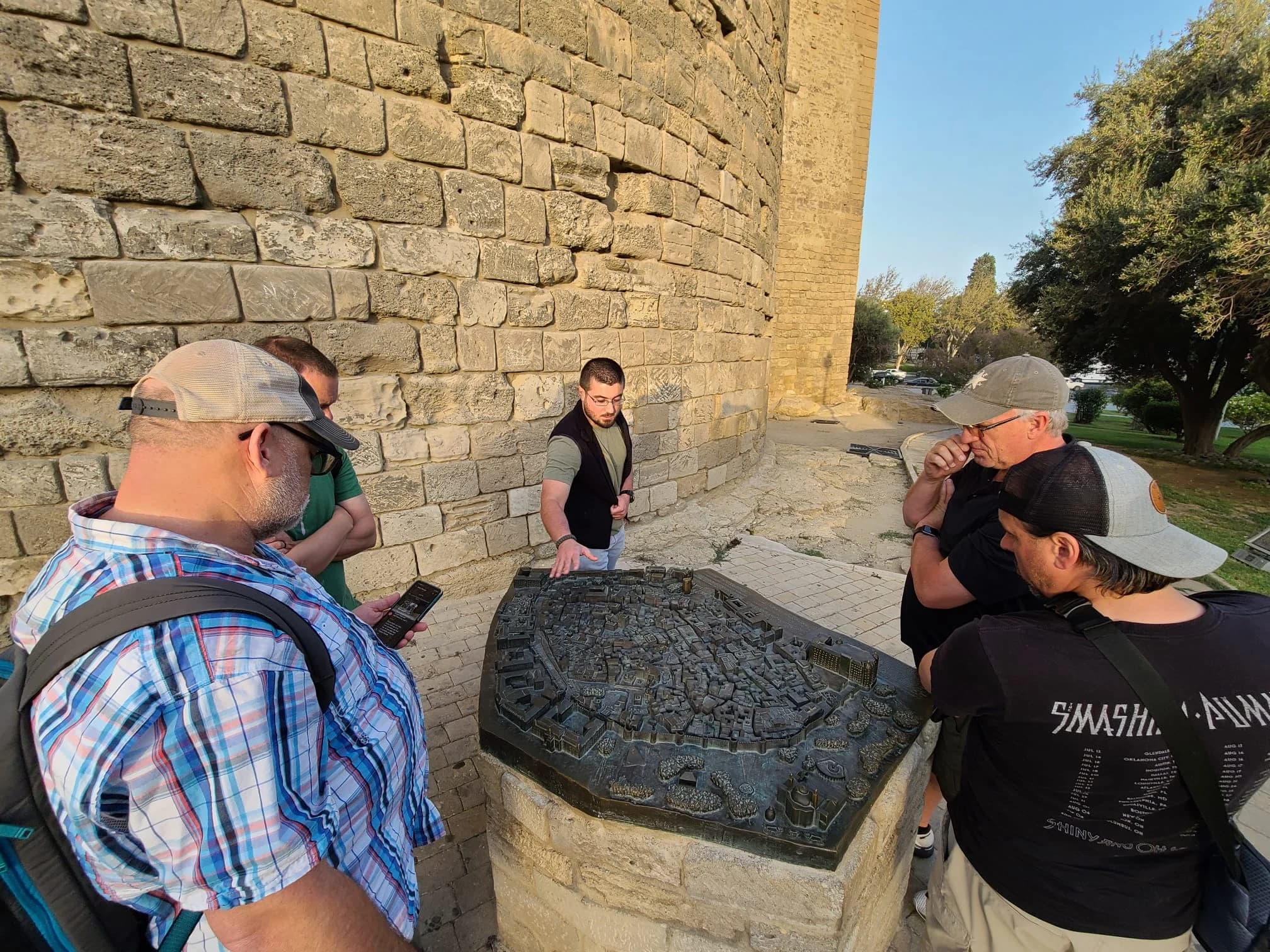
Baku's historical heart is Icherisheher, a UNESCO World Heritage site known as the Old City, where centuries-old traditions are preserved within formidable stone walls. Exploring its narrow, winding alleys reveals architectural marvels such as the Maiden Tower (Qız Qalası), an enigmatic structure with origins stretching back to at least the 12th century, and the Palace of the Shirvanshahs, a grand complex that served as the residence of Azerbaijan's medieval rulers. Travelers can immerse themselves in the deep history of the region and even find specialized Baku tours that delve into these significant landmarks.
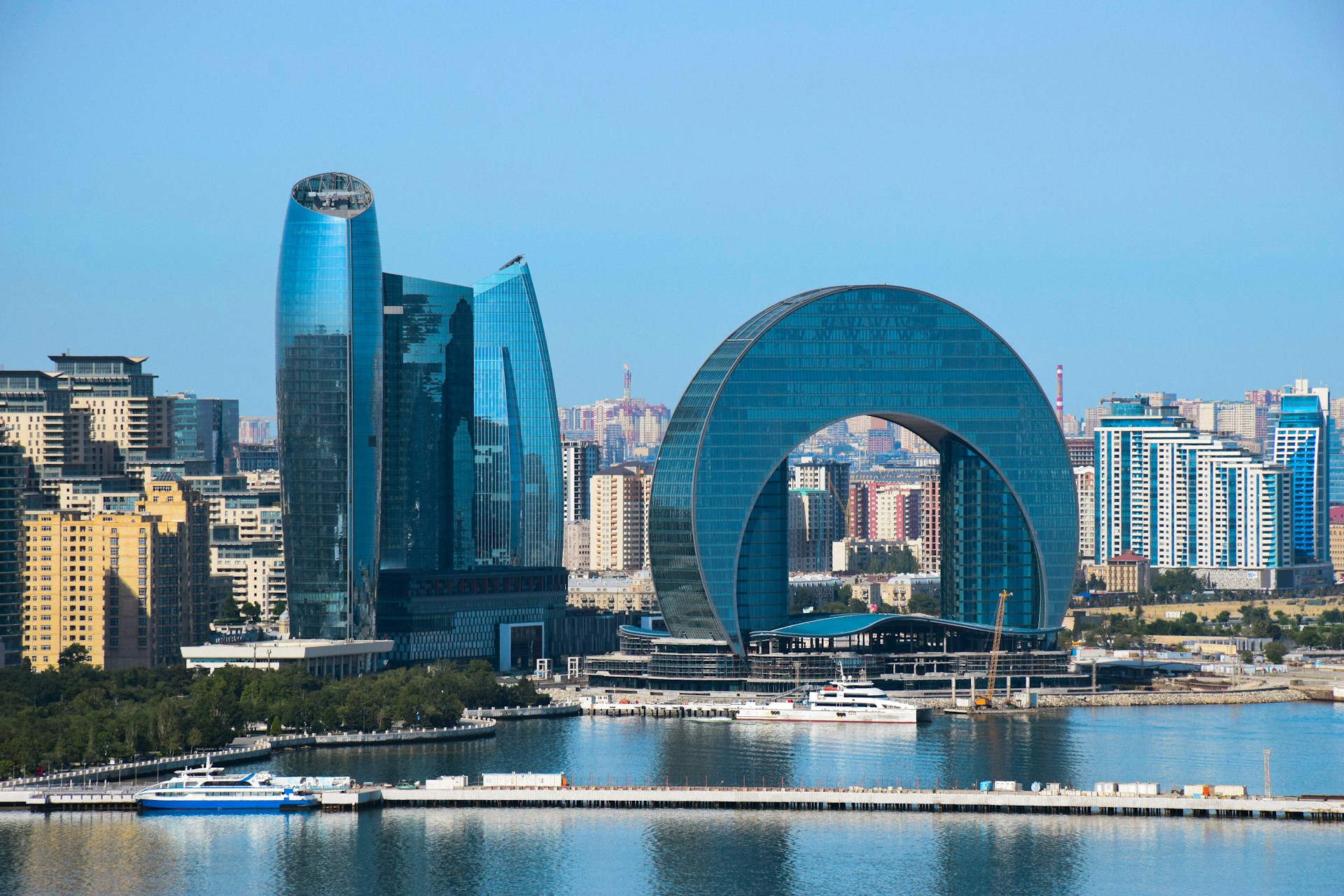
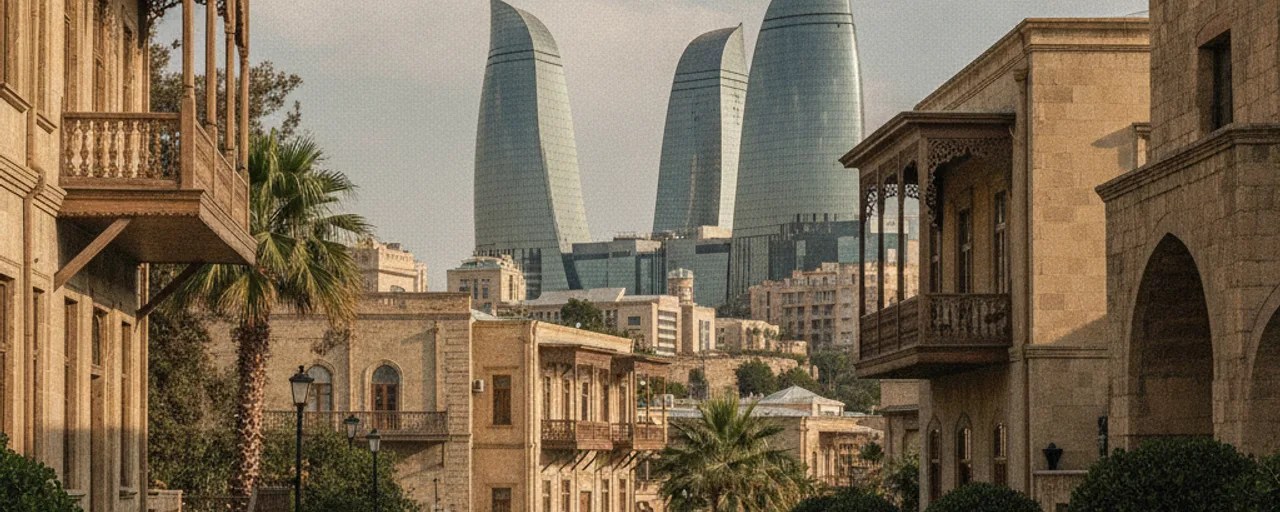
Beyond the ancient ramparts, the city unfolds into a canvas of modern design, showcasing Azerbaijan's rapid development. The iconic Flame Towers, three skyscrapers clad in LED screens that display flickering flames at night, dominate the skyline, symbolizing Baku's natural gas reserves. Another architectural highlight is the Heydar Aliyev Center, designed by Zaha Hadid, whose fluid, wave-like structure represents a departure from traditional rigid forms, housing cultural exhibitions and concert halls. This striking juxtaposition makes Baku a captivating destination for those interested in urban evolution and design.
Responsible Travel and Cultural Immersion in Baku
Baku suits a range of travelers, from history enthusiasts eager to explore ancient Silk Road heritage to architecture admirers fascinated by contemporary urban landscapes. Responsible travel here involves engaging with local culture respectfully and supporting local businesses directly. For instance, exploring markets like Teze Bazaar offers a chance to purchase local produce, spices, and traditional goods, providing direct support to local vendors and experiencing the everyday rhythms of Baku life.
When you visit Baku, consider minimizing your environmental footprint by utilizing the city's robust public transport network, including the Baku Metro, known for its ornate stations. Supporting local artisan workshops found within Icherisheher ensures that traditional crafts, like carpet weaving and miniature painting, continue to thrive. For further context on the city's background and development, refer to its entry on Baku on Wikipedia, offering comprehensive historical and geographical information. Responsible travelers who visit Baku will find a city eager to share its past and present.
This guide will delve deeper into specific neighborhoods, culinary experiences, and practical travel tips for Baku, allowing you to discover its unique spirit through informed choices. Plan your responsible exploration of this fascinating Caspian metropolis.
Don't miss
- Wander the ancient, fortified streets of Icherisheher, Baku's UNESCO-listed Old City.
- Ascend the historic Maiden Tower (Giz Galasi) for panoramic views of the Caspian Sea.
- Admire the curvilinear architecture of the Heydar Aliyev Center, a Zaha Hadid masterpiece.
- Witness the nightly light show illuminating the iconic Flame Towers.
- Explore the unique collection at the Azerbaijan National Carpet Museum, shaped like a rolled carpet.
- Stroll along the lively Baku Boulevard (Dənizkənarı Milli Park) beside the Caspian Sea.
Chapter 02
When to visit Baku
The ideal time to visit Baku for pleasant exploration is during spring, from April to May, or early autumn, in September and October. In spring, temperatures are comfortably mild (15-25°C), the city's parks are lush, and the wind is less intense than in winter. This period allows for comfortable walks through the Old City (Icherisheher) and along the Baku Boulevard. Early autumn offers similar agreeable weather (18-25°C) and fewer crowds than the peak summer months, though still lively. Summers (June-August) are often hot and humid (30°C+), while winters (November-March) are cold, windy, and can see rain or occasional snow. For a first-time visitor seeking the best balance of weather, moderate crowds, and reasonable costs, April and May are highly recommended for your visit to Baku.
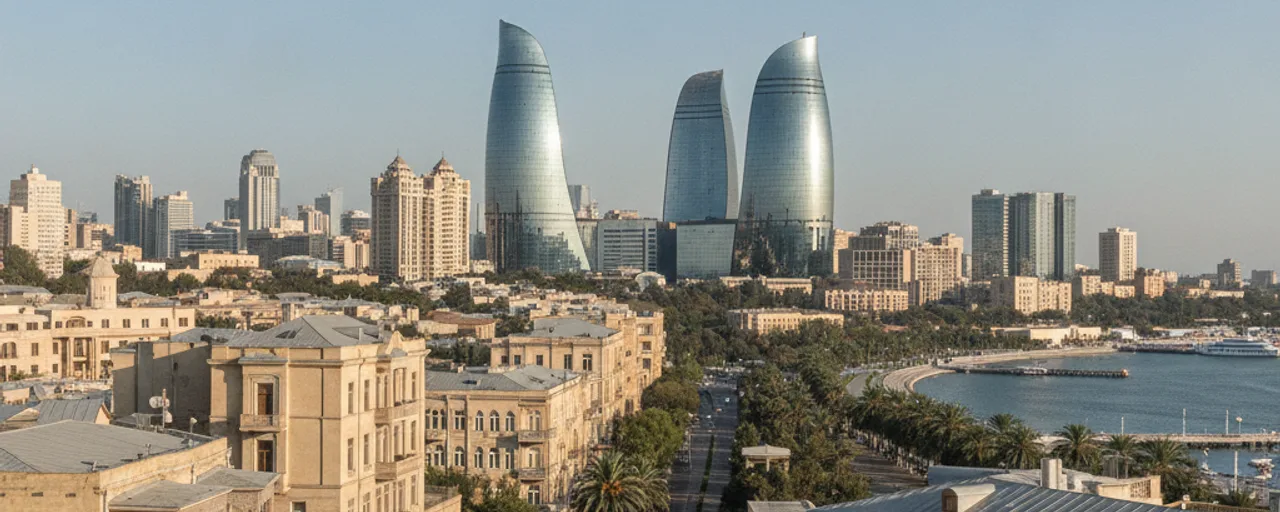
Baku experiences a semi-arid climate, characterized by warm, windy summers and cool, often blustery winters. Winter, from December to February, sees average temperatures of 3-7°C, often accompanied by strong Caspian winds and occasional light snow, which can make outdoor activities less appealing. Spring, spanning March to May, brings milder conditions, with temperatures gradually rising from 10°C to 20°C, offering pleasant weather for exploring the city. Summers, June through August, are hot and humid, frequently reaching 25-32°C, sometimes exceeding 35°C; while suitable for coastal visits, city sightseeing can be tiring. Autumn, from September to November, offers a pleasant return to mild temperatures, averaging 15-25°C in early months, ideal for walking. The best time to visit Baku is generally April-May or September-October for comfortable weather. Avoid July-August for intense heat, and December-February for cold, strong winds.
Chapter 03
Areas to explore
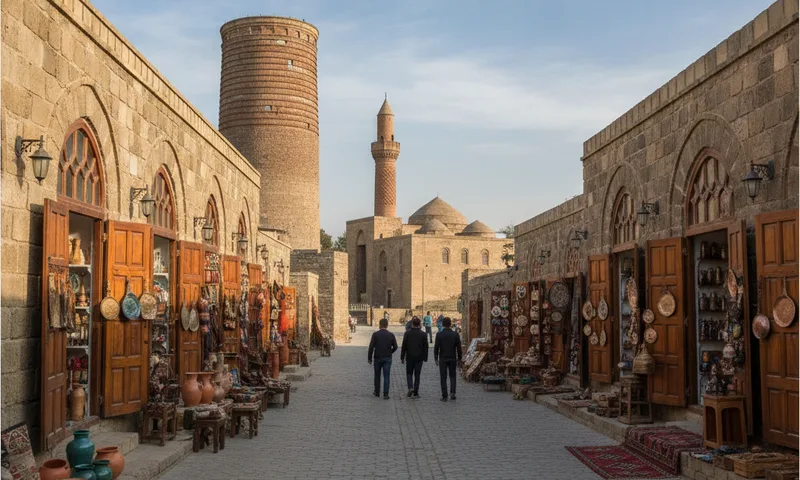
Ancient, Walled, Historic
Icherisheher
Icherisheher, Baku's ancient walled city, offers a journey through history with its narrow alleys and intricate stone architecture. Within its fortifications, visitors can explore the iconic Maiden Tower and the grand Palace of the Shirvanshahs. This UNESCO World Heritage site is ideal for history enthusiasts and solo travelers seeking to immerse themselves in Azerbaijan's rich past. Wander through its labyrinthine streets, discovering artisan workshops and traditional tea houses, making a visit to Baku truly memorable.
- Maiden Tower
- Palace of the Shirvanshahs
- Mohammed Mosque
Chapter 04
Getting around
Baku offers a well-developed transportation system. The Baku Metro operates three lines—Red, Green, and Purple—efficiently connecting major districts. Fares are 0.40 AZN per ride, paid using a rechargeable BakiKART, which is also valid on the extensive public bus network. Buses provide broad coverage across the city and surrounding areas, maintaining the same affordable fare structure. For a unique experience and city views, the Baku Funicular connects Neftchilar Avenue to Highland Park. Taxis are plentiful, typically metered. While a widespread public bike-share scheme isn't prominent, exploring the city center on foot is often feasible. Utilizing the metro and buses is highly recommended for reducing your carbon footprint, making them a sustainable choice for navigating Baku.

Baku Metro
lowLow carbonThe Baku Metro provides an efficient way to navigate the city, connecting many key areas including 28 May Square and Sahil. Its three lines run underground, offering a respite from surface traffic. A single journey costs 0.40 AZN using a BakiKart, making it a very economical choice. As an electric rail system, it is a relatively eco-friendly option for urban travel.
Purchase a reusable BakiKart at any metro station for a small deposit and load credit onto it for seamless travel across the network.
Chapter 05
Local culture
Baku's culture is a dynamic blend of ancient Persian, Turkic, and Soviet influences, evident in its architecture, cuisine, and social customs. A significant annual event is Novruz Bayram, the ancient spring equinox festival celebrated in March, symbolizing renewal and new beginnings. Families prepare traditional sweets like pakhlava and shakarbura, and engage in customs such as jumping over small bonfires. Hospitality is deeply ingrained; guests are often offered tea (chay) in pear-shaped glasses called armudu, served with jam or sweets, a gesture of welcome and warmth. Respect for elders is paramount, and it's customary to greet them first and listen attentively.
Hospitality and Tea Offering
highWhen invited to an Azerbaijani home, accepting offered tea (çay) is a sign of respect and appreciation for the host's hospitality. It's polite to accept at least one glass, even if only taking a few sips. Refusing without a strong reason can be seen as impolite, as hospitality is deeply valued. Do accept the tea; do not immediately refuse it if offered.
Chapter 06
Food and drink
Baku's culinary landscape is a reflection of its diverse history, blending Middle Eastern and Central Asian flavors. Plov, an aromatic rice dish with variations often including lamb, chicken, or dried fruits, is a national staple frequently found in traditional Azerbaijani restaurants around Fountains Square or along Nizami Street. Another widespread dish is Dolma, minced meat and rice meticulously wrapped in grape leaves or vegetables like eggplant, commonly served in cozy, family-run eateries within Icherisheher (Old City). For a hearty soup, Dushbara consists of tiny meat-filled dumplings in a clear broth, often available in local chaykhanas or dedicated soup houses. During festivities, look for Pakhlava, a diamond-shaped sweet pastry with nuts and syrup, in bakeries across the city.
Must try
Dolma
Contains meat; vegetarian versions with only rice and herbs are also available.Dolma features tender vine leaves (or sometimes cabbage, eggplant, bell peppers) meticulously stuffed with a savory mixture of minced lamb or beef, rice, and fresh herbs like mint and dill. Slow-cooked, it offers a soft texture and a rich, aromatic taste. This staple is found in nearly all traditional Azerbaijani restaurants when you visit Baku, often served with plain yogurt.
Azerbaijani Plov
Contains meat (typically lamb or beef)Azerbaijani Plov, a fragrant pilaf, showcases saffron-infused long-grain rice topped with tender lamb or beef. It often incorporates dried fruits like apricots and plums, and various nuts, offering a balanced sweet and savory taste. A signature element is 'qazmaq,' a crispy rice crust formed at the pot's bottom. This celebratory dish is a staple at traditional Azerbaijani restaurants in Baku.
Chapter 07
Before you go
Visas and entry
Most citizens from the European Union, the United States, and the United Kingdom are required to obtain a visa to visit Azerbaijan, including for travel to Baku. The most common and convenient method is through the ASAN Visa electronic system, which allows for online applications, typically processed within a few business days. While some nationalities may benefit from visa-free entry for short stays or different arrangements, this is not generally the case for these key visitor groups. Requirements, processing times, and fees can change, so it is essential to verify the latest regulations directly with the Ministry of Foreign Affairs of Azerbaijan or your nearest Azerbaijani embassy or consulate prior to your departure.
Health and safety
When you visit Baku, it's advisable to drink bottled water, as tap water is not generally considered safe for consumption. Consult your doctor well in advance for recommended vaccinations; routine immunizations are key, with Hepatitis A and Typhoid often advised for travel in Azerbaijan. Be aware of potential overcharging by unofficial taxis; always agree on a fare beforehand or use reputable ride-hailing apps. In crowded areas, like the Old City (Icherisheher) or Nizami Street, remain vigilant for pickpockets. For emergencies, dial 102 for police or 103 for an ambulance.
Emergency numbers
- Police
- 102
- Ambulance
- 103
- Fire
- 101
Embassy: Check your home country's embassy website for contact details in Baku, Azerbaijan.